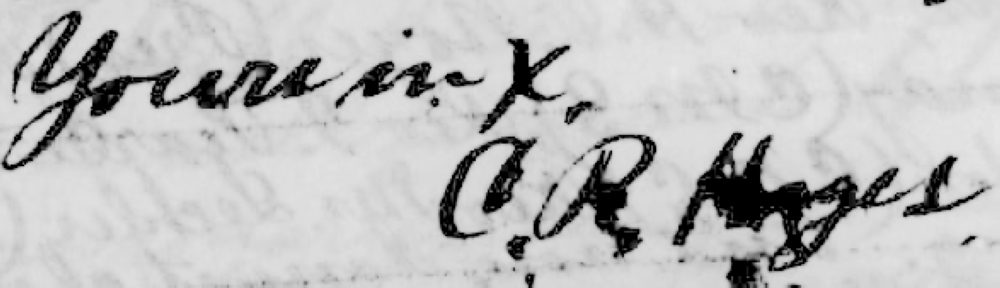
在 The Medical Missionary 期刊裡,找到一篇喜嘉理牧師的長文,寫的是關於孫中山先生的事蹟。編者在所讀過有限的書籍文章中,只見大部份研究孫中山的學者多會引用喜牧刊於 The Missionary Herald v.108 1912年4月號的那篇"Dr. Sun Yat Sen: Some Personal Reminiscences"或其譯文,而未見有人提及此文。比較兩篇文章,此文顯然長得多,在期刊裡也分成兩期連載,文中有不少資料在另一篇文均未有提過,是一篇極珍貴的文獻。
THE FIRST CITIZEN OF THE CHINESE REPUBLIC by REV. C. R. HAGER, M. D.
It was during the year 1867 that a child was born in the village of Tsui Hang in the District of Heung Shan (Fragrant Mountain) in the southeastern part of the Chinese Empire. There was nothing remarkable about the advent of the child. His parents. Chinese like, rejoiced that the little infant was a boy and not a girl, although another brother had already preceded him. Some fifteen to twenty miles distant was situated the old Portuguese colony of Macao which had been wrested from the ancient Empire of China by the daring Portuguese navigators, and which for many years in the past became the center for kidnapping Chinese and carrying them to various countries in South America. No doubt many of the able-bodied men of the Fragrant Mountain district were lured away from their homes and with the promise of gold were carried to distant lands from which they never returned.
As time went on, nearly every one in the district was considered a kidnapper by the surrounding districts. The little village where the object of this sketch was born lay some distance back from the sea in a sequestered retreat which is somewhat explained by its name “Purple Ravine." The family name, Sun, belongs to one of the smallest clan names in Southern China, while the village it self makes no pretensions to anything remarkable or great. Certain it is that no one ever conceived the idea that one of its members would one day
Liberate China
from the hated Manchu rule. When our young reformer was one month old the razor was applied to his head as in the case of all other Chinese children and he was shorn of all his hair, and the name of Yat Sen or “New-Every-day " was given to him. Time passed on and when he was six or seven years of age he, with other Chinese boys, with his book wrapped in a red handkerchief trudged barefooted to the village school whose master according to the regular standard beat his pupils over the head with the rattan when they did not know their lessons. A short distance from the village was the market where every five days, week in and week out, summer and winter, a fair was held to which our little Ah Sen was accustomed to go at first when only a baby on the back of his mother, but later he went on foot carrying two small baskets on each end of his little pole, so that he early learned to know what it meant to bear burdens for others.
Goes to Hanan
As time went on his brother went abroad to the “Sandal Fragrant Mountain," by which name the Hawaiian Islands are called by the Chinese, and as circumstances seemed favorable he sent for his younger brother, and so our little man, still a boy of some twelve or thirteen years of age, sailed for the mid-Pacific Islands. Dame Rumor has reported that our young aspirant’s father was a Christian, and once in the service of the London Missionary Society, but of this his own children never knew, and even the missionaries who associated with him in after years were never aware.
To all intents and purposes Yat Sen went to the Hawaiian Islands a pure and simple heathen boy, having never heard much if anything about the Master for whom he was to suffer so much in after years. It is also stated that when a boy he delighted in playing soldiers with the other Chinese boys, but whether this is so or not, he certainly never pretended to shoot with guns as our modern soldiers do, for at that time the Chinese still used bows and arrows, and little Ah Sen was not of a vindictive or war like temperament. He, like his father, coveted peace, and one of the relatives has to say of the father, that he was of an equable temper, not given to strife or contention, and these characteristics his son eminently cherished. His very face and his half shut eyes when he smiled or laughed indicated that he had not much of the martial spirit in him even if some have tried to make the world believe that our young Ah Sen wished to imitate the great Tai Ping rebel leader. Sin Hung Tsuen, who tried to drive the Manchus out of China. Whatever else our young hero may have been in those early years and even in his later years he was never a warrior, and he had really little of the martial spirit in him although he learned to command men as one of the greatest generals of the world.
In the Hawaiian Islands a new world opened to him, and it was there that he received his first religious impressions as well as some of his revolutionary ideas of reform. His school life brought him into contact with missionaries and reformers, and he early learned to imbibe their ideas, so that he could say with truth at a reception given him in Peking, “Men say that the revolution originated with me. I do not deny the charge. But where did the idea of the revolution come from? It came because from my youth I have had intercourse with foreign missionaries. Those from Europe and America with whom I associated put the ideals of freedom and liberty into my heart." And the first missionaries from whom Yat Sen heard the Gospel were those whose parents transformed the Hawaiian Islands into a Christian community.
During the experiences of the young Chinese boy in the islands, it fell to his lot to associate with some rare spirits, and one of these was the Rev. Frank W.
Damon, who for many years was the principal and superintendent of the Mills Institute for Orientals in Honolulu. It was in the autumn of 1883 that Yat Sen
Returned Once More to His Native Land,
being a passenger in the same steamer as the above mentioned missionary. At this time he was about eighteen years old according to the Chinese method of reckoning, and the reason for his return at this time was that from time immemorial it had been decreed by Chinese usage, which in those days never changed, that a young man of his age should seek himself a wife among the black-haired daughters of Han, or rather that his parents should choose for him a life companion. Whether the bridegroom worshiped the ancestral shrines is not certain, but it is commonly reported that when he went to his own village he told some of the village boys that the idols were false, upon which the young men dared him to strike these gods. Our coming revolutionist struck off a finger of one of the idols, whereupon a great cry was raised in the village against this sacrilege, and the elders of the village declared that he must be banished and his name struck off from the ancestral roll whose benefits usually amount to considerable. A great uproar was created in the village at this outrage against their protecting deities, but at this point the good old father whom the villagers knew as a peacemaker interceded for his son and even paid a small sum of money, and the young prospective bridegroom was not disinherited. It is, however, safe to say that he never molested another idol in the village.
Other young men after embracing Christianity have tried this iconoclastic method of dealing with idols when some bystanders dared them to molest the idols, but the result has always been very much the same: a great uproar and severe threatenings against the offender followed. But this was only the first encounter with old Chinese beliefs which he is still steadily opposing and fighting with all his might.
After the Marriage
had been celebrated in Chinese style he was free to leave his young wife and go to Hong Kong for more study, and it was about this time that he became acquainted with the writer with whom he lived in the same house for several years. At first he attended the Diocesan School under the Church of England, but it was not long before he changed this school for that of Queen ‘s College, which was under the control of the British Government. Both these schools offered no higher education than that which is afforded by our grammar schools and two years of the high school. This statement is made because it is sometimes stated that Dr. Sun Yat Sen was a graduate of a college when he really never finished the curriculum of either one of the above mentioned schools.
It was while attending school in Hong Kong in the year 1884 that he was baptized by the writer into the Christian faith which as we have seen he had previously espoused. The place of his baptism was a common Chinese grant-in-aid school room in Hong Kong where some seventy-five to one hundred boys studied during the week, while on Sunday a few adherents of the American Board Mission met in worship. The missionary was at this time still struggling with the Chinese language, and whenever he spoke to his young convert it was in pure American English; though he remembers how encouraged he was to be told by him on a later occasion that he spoke better Chinese than a noted missionary who at that time was considered one of the best American-Chinese speakers.
Twenty-eight years after his baptism Dr. Sun Yat Sen once more visited the little church where he first made profession of his faith. The church no longer occupied the day school room, but on the same street about one hundred yards distant stood a beautiful brick structure four stories high, in the second story of which all the Christians of Hong Kong were met to receive the distinguished ex-President of the Chinese Republic. One thousand or more were packed into the church auditorium while the streets leading up to the church were literally thronged to see the
Christian Emancipator of the Chinese People
from the hated Manchu rule.
In that audience there was one at least who witnessed his baptism years before; others were there who sympathized with and even aided him in his first revolutionary attempt, and others, too. with whom he had talked reform while a student at the Hong Kong Medical College. Some were there who disbelieved in his methods formerly but who were now doubly glad that he had succeeded. What a home-coming this was, for Hong Kong was practically the birthplace of his enlarged ideas of reform where his own crude ideas began to take shape. And now as a victor he returns home to some of the same friends that had stood by him during all these years. For once at least the despised church of Jesus receives adequate honor by the coming of its distinguished guest, and the heathen Chinese must acknowledge that the “Jesus people" are no longer the off-scouring of the earth.
But Sun Yat Sen has not changed much except in years; there is the same pleasant, winning smile as he greets one after another of his friends and then in a few simple words relates how he was baptized years ago in their midst, and admonishes his hearers to be true to their church vows and to work for righteousness in the Chinese Republic.
The congregation was largely composed of Chinese, the old missionary who had received him into the church had been invalided home never to return, but in his place stood a strong native Cantonese as pastor who conducted the services with ease and grace, and the very building in which this wonderful scene occurred is now entirely under native management.
But we are anticipating the end from the beginning, when the long and weary road of persecution, trial and difficulty must yet be trod by the young reformer.
During the summer months of 1884,
Sun Yat Sen Invited Two Missionaries
to visit with him his home, and they were probably the first white people that had ever visited the little hamlet which at that time was not easy of access. Going by way of Macao, they stopped one or two days there and sold a number of Scriptures to the natives. The remainder of the journey was made in a small Chinese junk under some difficulty, while the latter part of the way was made on foot. It was in the early morning as they entered the village that they saw the old mother whom Sun Yat Sen greeted in regular Chinese fashion by merely grunting a little without even shaking hands or showing any sign of pleasure.
Perhaps he did not know how he was going to be received with two foreigners to whom the Chinese gave no other sobriquet than that of “foreign devils." However that may have been, those same foreigners fared sumptuously at his hands and two splendid meals were served each day to them in regular Chinese style in one of the houses be longing to the family where they lived and slept. No doubt Dr. Sun Yat Sen believes now in shaking hands; for when the writer recently met his children at Berkeley and offered to say “good-bye" a la Chinese they immediately resented it and offered their hands for a good American handshake. And the time will come when his daughters will kiss him according to American style and not merely say “How do you do," in a casual way as he did on that summer morning long ago.
The writer has never forgotten the cold chills the heathen custom sent creeping up his back when he saw the meeting of mother and son, but it was perfectly proper according to the ancient rules of Chinese etiquette. During the brief stay of these missionaries they visited the market and sold Gospels to the people, and occasionally caught a glimpse of some of the other women folk, his wife and his sister-in-law. Occasionally they were also delighted to have a few of the younger men come to them for instruction in the doctrines of Christianity, for Sun Yat Sen was not ashamed to confess his Lord before the then scoffing Chinese world, and such was his earnest testimony that two of the bright young men of the community followed his example and were received into the Hong Kong church.
He never was a born orator but always an earnest pleader for the truths that he deemed right, and there was a time that he talked religion quite as much as he talked on reforms later on.
One was apt to think that he was a little unstable in some of his ways, but whatever cause he espoused he did so with all his heart. Soon after this visit to the village, and two of his companions had become Christians, all of which was reported to his older brother in Honolulu from various sources. Sun Yat Sen received a letter from his relative to come to Honolulu as his signature was necessary to a certain legal document. Before this he had, however, peremptorily demanded of his younger brother that he give up his religion and follow the customs of the Chinese in their worship of idols. But a new life was coursing through young Sun’s veins and he had said good-bye forever to all the Chinese gods. Little suspecting what was before him, he embarked for the Hawaiian Islands, where he encountered his brother’s stern command to give up his religion or else face a life of penury, as the older brother sternly told him that he would no longer support him as he had done in the past. Fortunately for Sun Yat Sen, some of his friends in the Islands were Christians who espoused the cause of the persecuted young convert and made up a purse to send him back to China
To Study For the Ministry.
With this object in view the young man once more returned to Hong Kong, and if the future could have been foretold perhaps he might have been directed towards the sacred calling; but even missionaries are not always blest with the wisdom of Solomon and perhaps in the plan of God he was to become the emancipator of his people. Finding no opportunity to study for the ministry with adequate support, he turned toward the medical profession against which the heathen Chinese are not so much opposed as against that of the Gospel ministry. But even at that period there was only one such medical school in South China, and as his allowance was quite meager at first he was often in need of money. His brother, after hearing of his desire to study for the medical profession, so far relented that he aided him to some extent in his medical education. Then, too, there were those at the old homestead who thought better of him, and his Christianity did not interfere with their taking an interest in Sun Yat Sen and secretly helping him all they could.
An older brother in China is always expected to do all he can for his parents, and his brothers and sisters, and so no doubt some of the money sent home was given to our young medical student, but during the first two years of his medical career he was often short of funds, and sometimes found it hard to meet the fee required by Dr. J. G. Kerr under whose instruction he studied from 1885 to 1887. If all had been known perhaps he would have been judged more favorably by that famous missionary physician who was inclined to think that Sun Yat Sen was rather vacillating. And this opinion has been held by others who expected him to meet every requirement of the missionary propaganda; but young Sun had been brought up to spend money a little more lavishly than most missionary boys are allowed to do, and so in his straitened circumstances it was some times hard for him to meet all his necessary expenses for tuition, board and lodging besides the books required.
In 1887 when he entered the Hong Kong Medical College all these things were provided, so that it mattered little to the young man whether his brother still adhered to his policy of disinheriting him ; he could now obtain his medical education free of expense by attending to certain duties in the hospital. It was during these five years of medical study in Hong Kong that, as said before, he with others commenced to entertain the
Idea of Reforming China.
That old Alice Memorial Hospital erected by the Chinese husband, Sir Ho Kai, in memory of his beloved English wife, was the home of more than one reformer. The physicians-in-charge, Drs. Canthe, Manson, Jordan, Hartigan and Thompson were some of the best trained English physicians and Dr. Canthe has remained the lifelong friend and supporter of Sun Yat Sen, sympathizing most thoroughly in all his ideas, besides saving him from execution at a later period in his life. Dr. Thompson not only imparted medical instruction to his students but he led his students also to believe in the Great Physician of us all. One could but feel that he daily learned from his Master and Lord. On one occasion the writer remarked to Sun Yat Sen that he had heard that he was the best student in his class, to which he replied in his own characteristic way, “There is no first one, we are all the same!" How clearly this illustrates Sun’s character. He never placed himself above his fellows, but thought of himself only as an equal to his fellow men and not superior to them. It was in 1892 that he received his medical diploma after having studied seven years, and this is practically all the higher education which he enjoyed, but chemistry and physics as well as botany opened a new world to the future first president of China, contrary to all preconceived ideas of the Chinese; and in their taking root in his and other hearts, the ideas of reform sprang up.
Many discussions were held in the rooms of the students; and the pastor of the London Mission being a progressive himself was no doubt often a sympathizing listener, for one of his sons came in after years to hold an honored place in the first cabinet of the new Republic. Pastor Wong was an earnest pastor but the as well as his father before him and his brother became reformers in the religious life of the Chinese and his sons carried it one degree further, into the political life of China.
For the next two years after his graduation in medicine he took charge of the Western Medical department of a Chinese hospital in Macao where according to his former preceptor, Dr. Canthe, he showed considerable skill, but it is safe to say that with all his practice he still found time to give expression to his ideas of reform among the Chinese gentry and others with whom he was permitted to associate. The old Chinese sleeping giant had begun to yawn a little and show some signs of awakening, but alas! the young Emperor of China had not yet begun to set up a railroad in his palace and there was practically no change for the better.
Under these circumstances Dr. Sun and others formed themselves into a secret society to
Oppose the Existing Corrupt Government,
and like others before them the attempt was to be made in the city of Canton. But the plans of the reformers miscarried and instead of driving out the Chinese officials most of the ring-leaders were themselves seized and summarily beheaded, and among them was one of Dr. Sun’s friends whom he had led to Christ. It is also stated that this young man, Mr. Luk, first informed Dr. Sun that the authorities were after him, which enabled him to make good his escape, while he himself suffered martyrdom and confessed before his execution that he and Sun as well as others had plotted against the reigning government.
Many of the hired coolies who went from Hong Kong to Canton, a distance of ninety miles, to take possession of the officials’ residence were themselves placed in custody.
This occurred just after the close of the Chinese and Japanese war by which China had been so humiliated and had lost the Island of Formosa. Dr. Sun had closed his labors with the Chinese hospital in Macao because the Portuguese Government only allowed doctors with a Portuguese medical diploma to practice in the city.
Before the attempted revolution the writer received a call from Dr. Sun during the autumn of 1894. He was dressed in his silken Chinese robe and was as cordial as ever, and when a friend asked how the writer ever came to baptize such a remarkable person, he was perplexed for a moment how to reply, for he had never considered him a remarkable prodigy of intellect or force of character. But if the prince of Chinese preachers could say this, it indicated that there was something unusually brilliant about this former convert. But Dr. Sun chatted along in his familiar style as if there was nothing very superior about him, at least so thought the writer, and he insisted that it was God who had influenced him to become a Christian.
Not a word was said about the in tended revolution, in fact, Dr. Sun has always been
Careful Not to Involve Any of the Missionaries
in his revolutionary plans. He may have gained his ideas of liberty from their teachings, but he has never made them his confidants in cementing his revolutionary schemes; in fact, most of these persons both in China and in America advised him against using any drastic measures, and what he has accomplished has been chiefly done through and with the aid of Chinese. A few foreigners may have been interested in his schemes, but on the whole he has wrought them out alone and singlehanded. There were other Chinese reformers who disdained his methods and who never were willing to join him. and so from the winter of 1894-5 when he barely escaped with his life, he became a wandering refugee upon whose head, dead or alive, was placed a sum of money which was increased until it reached the enormous sum of one hundred thousand pounds sterling. Japan and even Hong Kong denied him the right of sojourning in their territory, and so whenever these places were visited he was obliged to go incognito, and be never felt himself safe anywhere at first. After the Canton episode and failure he made his way to Japan and later to the Hawaiian Islands to which his family emigrated. It was while here that one day he met his former instructor. Dr. Canthe. in 1896, who asked him to come to England, which he did during the same year, when he was lured to the Chinese Embassy in London, and there was made a prisoner with the expectation of carrying him back to China in order to give, him up to the old Empress Dowager who was looking for the heads of all Chinese reformers.
It was while he was incarcerated in his London prison waiting to be secretly sent to China that
Dr. Sun Gave Himself up to Prayer
and realized that God was his friend though all the world was against him. In his extremity he found solace and comfort in the promises of God, and it is safe to say that his religious life was very much deepened. Indeed, most of the religious expressions ascribed to him date back to this time of trial when he had little hope of extricating himself from the clutches of the old Manchu Government, which for eighteen years in almost every land had its spies to watch the movements of the hated Sun. But Dr. Sun believed that he must do all he could to answer his own prayers, and secretly dispatched a note telling of his sad condition which in due time reached Dr. Canthe who with the aid of the English Government soon secured his liberty.
A separate chapter might be written on this episode, but it is sufficient to state that Dr. Sun always felt that his old Hong Kong preceptor had saved his life, and for this reason as well as others he has remained his lifelong friend.
But what will our liberated reformer now do? Will he continue his reform efforts, or settle down like so many had done before him, and say it is no use? Once he had escaped by a very narrow margin, when he attempted to reform China by the use of arms, and after fleeing for months found himself entrapped in the greatest metropolis of the world. Surely he has done his duty. But that is not what our Sun said. After spending some time with his medical friend and instructor he embarked once more for the theatre of his action. He had tried the use of arms and thought that that was the only way to free China, but now he discarded these weapons of warfare and commenced his peaceful revolution by preaching his doctrines of reform to all classes of Chinese in every land.
He had been entrapped onee by the authorities, and this made him more careful but none the less bold and persistent to carry his evangel of righteousness to all parts of the Chinese world. At first, some of the Chinese looked with disfavor upon his cause, but he continued to disseminate his doctrines far and near until year by year his cause gained strength. From one place to another in his own country he traveled, on foot, on boats and in every way he could to disseminate his one gospel,
“The Chinese Must Rule; and the Manchus Must Go."
Three doctrines he dwelt upon continually, which were these: 1. The people of the eighteen provinces are by right the real inheritors of the Empire of China. 2. The Chinese people must be supreme in government and not submit to the Manchu’s rule. 3. The people must control the matter of wealth production. And not only were the eighteen provinces traversed from north to south and from east to west, but his journeys took him to other lands whither the Chinese had emigrated. Siam, Straits Settlement. Cochin China, the Philippine Islands, Japan, Hawaiian Islands, Canada and America were all visited with this same gospel of freedom from oppression’s rule.
Some who sympathized with him at first began to think that his ideas of reform would be carried out by the old Manchu Government, especially when the Emperor Kuangsu issued so many edicts for reform.
The writer himself meeting him twice in 1904 in America, suggested to him that the Manchus were bringing to the Chinese all the liberties that they craved, but his simple reply was, “No; the Manchus must go." He did not attempt to argue the case but simply asserted what he believed to be the right thing to do.
It would be interesting to relate all the experiences of Dr. Sun Yat Sen in all these wanderings, for as a rule, except when he was among friends, he was almost always disguised, sometimes as a spectacled Japanese peddler who went into the heart of China disposing of his little wares and preaching his reform ideas and sometimes in another role, when he almost fell into the hands of his enemies. In Canton he found an asylum in the hut of a friendly boatman, which being observed by some spies of the government was watched, and the only way he got away unobserved was after a friend had
Shot These Soldier Spies.
At another time in the same city an officer and twelve soldiers came into the room where he was, to arrest him, but he read and talked to them about the teachings of their ancient sages in such a fascinating manner that they were simply spell-bound and never laid hands on him, although to capture him meant promotion and a large reward for all the men. A similar event occurred in Nanking when a man came to arrest him on a boat, but Dr. Sun’s persuasive manner again gained the victory and the man felt so ashamed at what he had tried to do that like Judas he went and hanged himself. In the Island of Hainan he was once a prisoner for six months because he could not leave the house with safety.
The time may come when Dr. Sun may divulge more of his narrow escapes and state in how many different ways he eluded the spies of the old Empress Dowager who longed for his head quite as much as Herodias did for the head of John the Baptist.
Some of his former friends were not prepared to believe that he had traveled all over China and made converts every where. His presence in Japan, and other foreign countries adjacent to China, was expected, but that he should put his head almost into the very jaws of the lion the writer never dreamed of. He had heard of his speaking in America and Canada but never supposed that he would dare to set his foot again on the soil of his native province, which how ever he did again and again.
When disturbances broke out here and there over the empire no one had an idea that they were the result of Dr. Sun’s teaching, which they really were. And few believed at the time when the government and the revolutionary troops clashed arms in the autumn of 1911, at Hankow, that Dr. Sun was the cause of it all. And yet this was so, although he was in America at the time. And when the time was fully ripe for the formation of a republic a telegram was sent to London to meet him on his way to China, asking him to accept
The Presidency of the Chinese Republic
which he had brought into being.
Some diplomats and others were surprised that such an unknown person was chosen, but Yuan Shi Kai knew his worth and wanted him to return long before. It was but natural that he should become the head of the government that he had created, nourished and for which he had suffered so much. Fifteen years before, he had almost lost his head and now he is placed at the head of the greatest nation in the world, and if it is asked what brought or put him there, it may be replied, his unselfish patriotism, his great love for his own countrymen, his simple and persuasive manner and his patient self-sacrifice. Once more he enters China, not as a fugitive but with the seals of office in his pocket ; he was driven from home and now he is besought to return and rule a people that had spurned him.
Surely he has conquered, not by weapons of carnal warfare, but by his own gentle, persistent and patient preaching of his propaganda. Dr. Canthe calls him the “most perfect character" he ever knew, and his simplicity, amiability and unselfishness have won the hearts of all the Chinese people, and so they place him at their head. He accepts the presidency, but when he sees that more can be accomplished for the people and for China without the shed ding of blood, he resigns in favor of another, but not until he is sure that his ideal form of government, a republic, is established. No need of a Hague tribunal to settle the difficulties between the premier of the old Manchu rule and the new President of the young Republic. Sun Yat Sen, whose name now means “Immortal Rest," holds his hand on the helm of the ship of state and guides it into safe waters, and when during the first months of the year of 1912 every one was wondering what the outcome would be between the old and new rulers in China, lo and behold, the new ship of state, the Republic of China, is launched without the shedding of blood, and this was due to the noble chivalry and generous self-denial of Dr. Sun Yat Sen who had learned his first lesson at the feet of missionaries.
“Father of His Country"
do you say? Oh, no. he does not lay claim to that, he has only accomplished the grand purpose of his youth and man hood and now he can rest and let others take the helm. His work is done as a ruler, but he becomes instead the first citizen of the great Chinese Republic.
He refuses all office and only accepts the position of railroad commissioner because by so doing he can unite China more thoroughly together, but when he speaks now his one word weighs more than ten words of any other Chinese, for he has so won the hearts of the Chinese people that he has become their idol. Whether in the president’s chair or as a wandering refugee, wherever he goes, he always portrays the same qualities of gentleness and good will to all. From north to south he has gone cementing the Chinese people, and bringing into one harmonious whole the various provinces of China until the north as well as the south rejoices to do him honor. During a visit to Japan during February and March in 1913, he was most royally feted by all classes, and has cleared away much of the animosity that existed between the Chinese and Japanese; yea, some of the leading Chinese regard his visit to Japan as the great harbinger of peace through out the East.
Truly he merits the title of the great Peacemaker of the Orient, and is honored to-day not only by his own country but also by Japan who has shown its good will by every courtesy in its power. Whether he will ever be willing to offer himself as a candidate for the presidency remains exceedingly doubtful, since he does not long for power or patronage, but rather that he may bless and benefit his country, and his spirit of self-abnegation will be a lasting memorial to him of which any land and any country may be proud.
(Extracts from “The Medical Missionary" Vol.22 1913, p.184-188&218-224)
原文:https://babel.hathitrust.org/cgi/pt?id=mdp.39015071512126;view=1up;seq=190